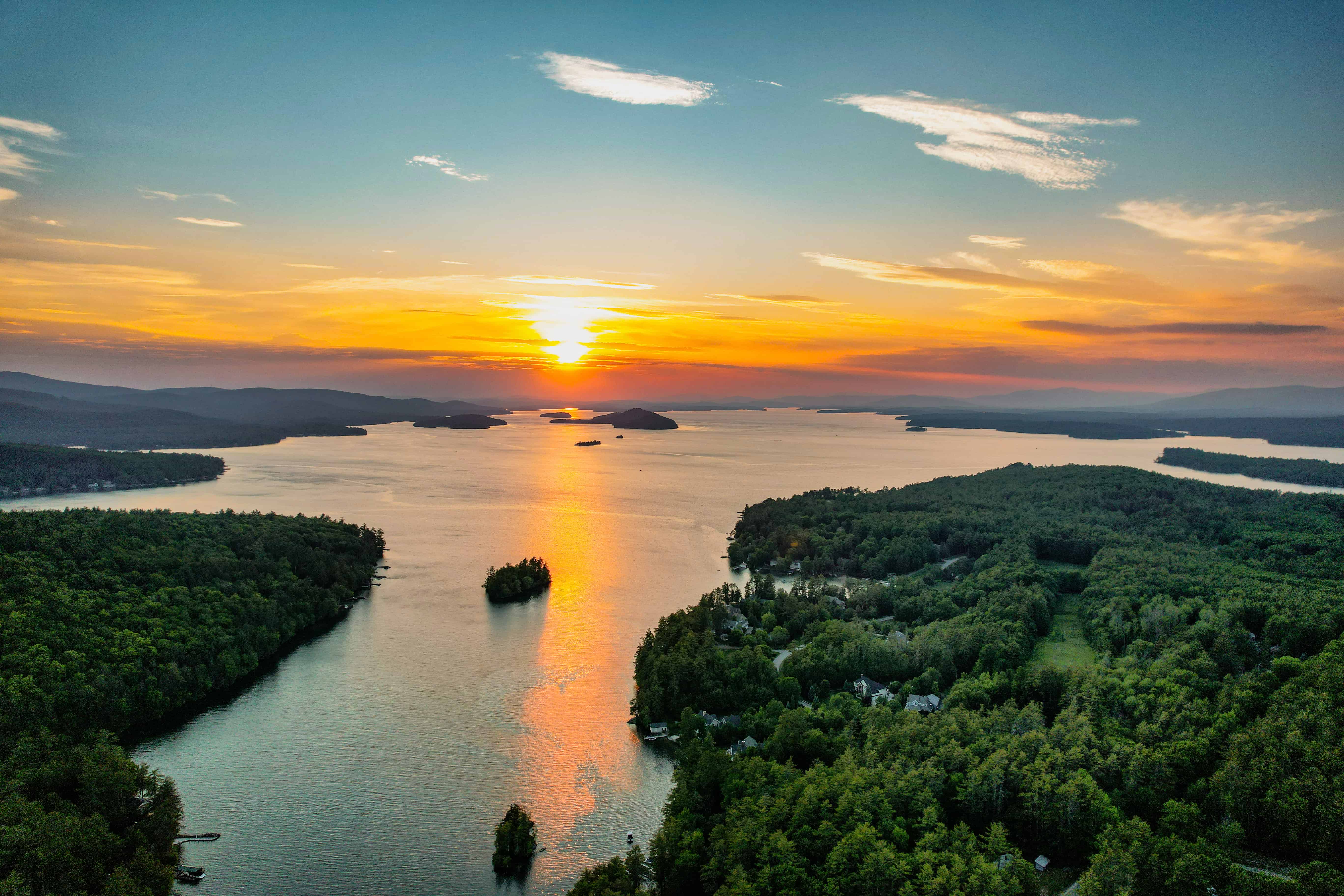
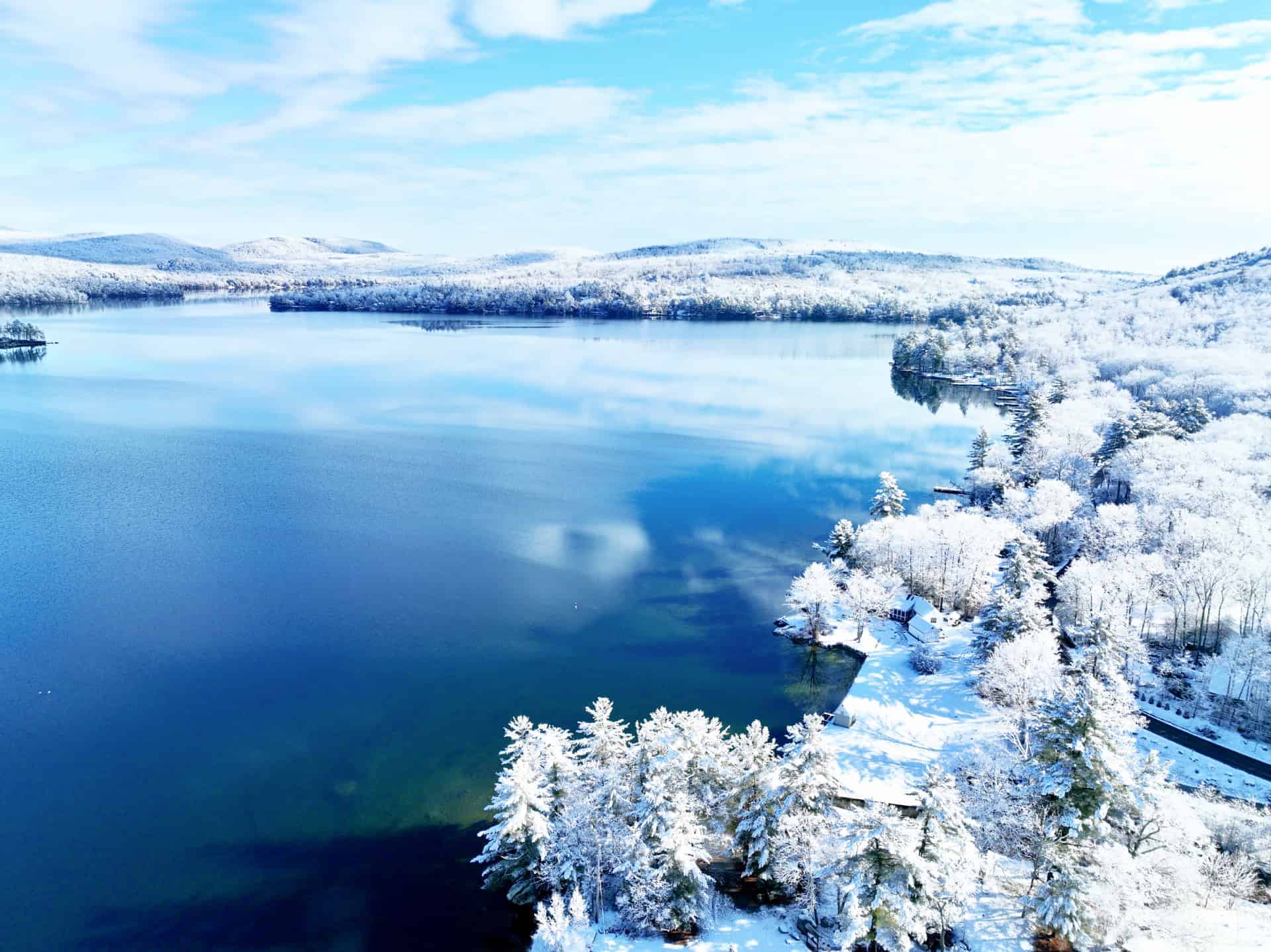



It is not just the lakes. It is the rare combination of water, mountains, privacy, access, and four-season living that makes this part of New Hampshire so compelling.
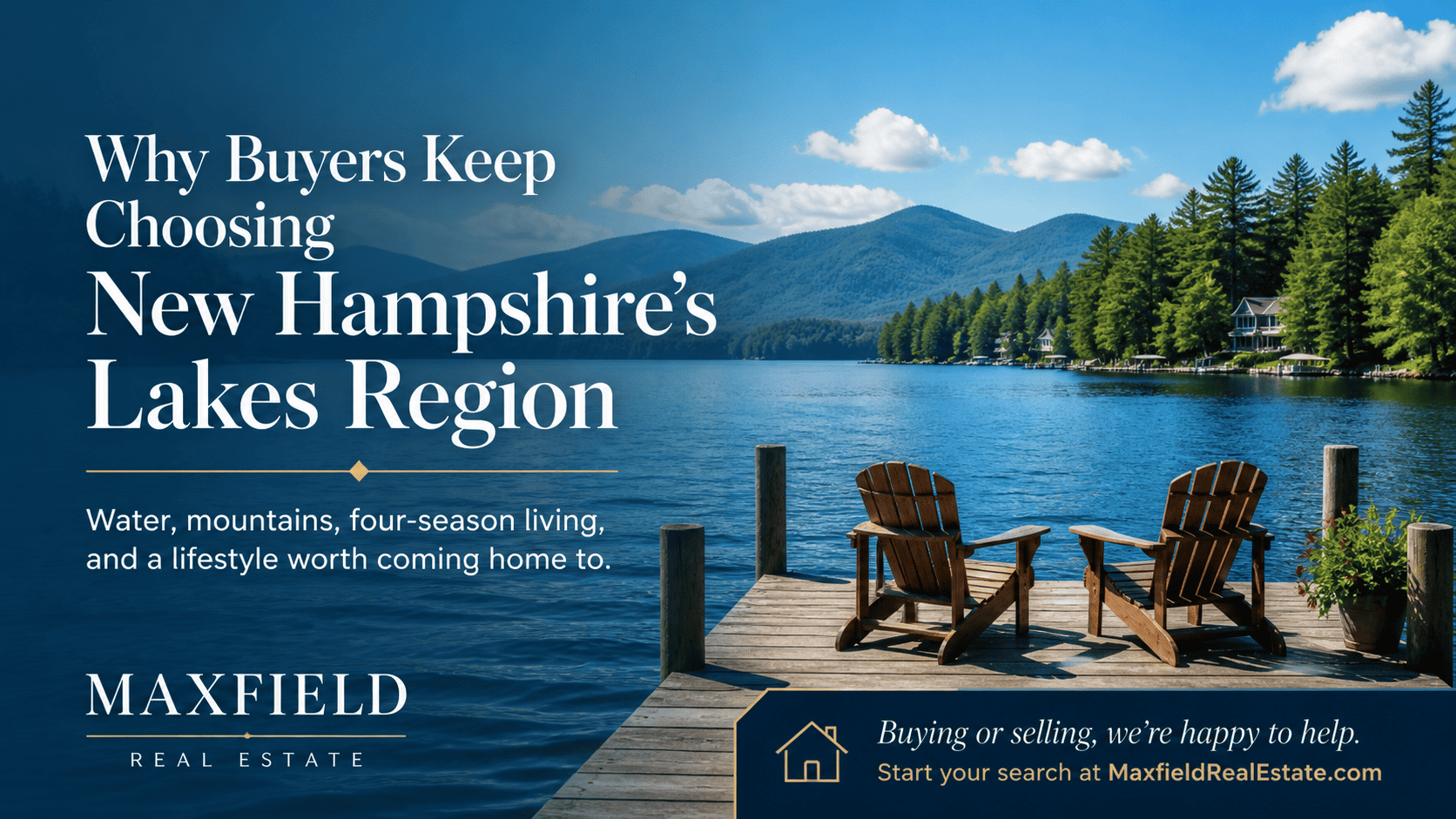
There is a reason the Lakes Region keeps showing up on buyers’ wish lists.
Actually, there are several.
Yes, the water is the obvious draw. Lake Winnipesaukee tends to get the spotlight, and deservedly so. It is iconic, beautiful, and large enough to offer an entire world of boating, islands, coves, views, and waterfront communities. But the Lakes Region is not one lake, one lifestyle, or one kind of buyer.
That is where people often get it wrong.
The Lakes Region is a collection of very different towns, lakes, neighborhoods, shorelines, village centers, mountain views, back roads, private roads, island properties, year-round homes, seasonal camps, legacy estates, and tucked-away places that do not always announce themselves loudly.
Which, frankly, is part of the charm.
For buyers relocating from Massachusetts, New York, Connecticut, Florida, or elsewhere, the appeal is often bigger than simply “buying a lake house.” They are looking for space, scenery, quality of life, lower density, fresh air, outdoor recreation, and a different rhythm of living.
But they are also looking for something harder to define.
They are looking for a place that still feels like a place.
Not a subdivision with a boat decal. Not a resort brochure wearing a blazer. A real region, with real towns, real seasons, and real differences from one property to the next.
The Lakes Region offers more than one version of “lake life”
One of the first things buyers should understand is that lake life in New Hampshire is not one-size-fits-all.
A waterfront home in Meredith does not offer the same daily experience as a property in Alton, Gilford, Wolfeboro, Center Harbor, Moultonborough, Tuftonboro, Laconia, New Hampton, Sandwich, or Bristol.
And that is before you even get into the differences between lakes.
Some buyers want big-lake energy: boating, restaurants by water, marinas, fireworks, sandbars, and a full social calendar. Others want quiet coves, smaller lakes, loons at sunrise, paddling, fishing, or privacy. Some want a classic family camp with history and character. Others want modern construction, deep water docking, western exposure, and room for guests.
Then there are island properties, which are their own category entirely.
Island living on Lake Winnipesaukee can be magical, but it is not casual real estate. Access, boats, docks, barging, weather, power, septic systems, association rules, and seasonal logistics all matter. A buyer who only sees the sunset may miss the practical details that shape ownership.
The view may sell the dream.
The due diligence protects it.
Four-season living changes the value equation
The Lakes Region is often marketed as a summer destination, but that undersells it.
This is a four-season region.
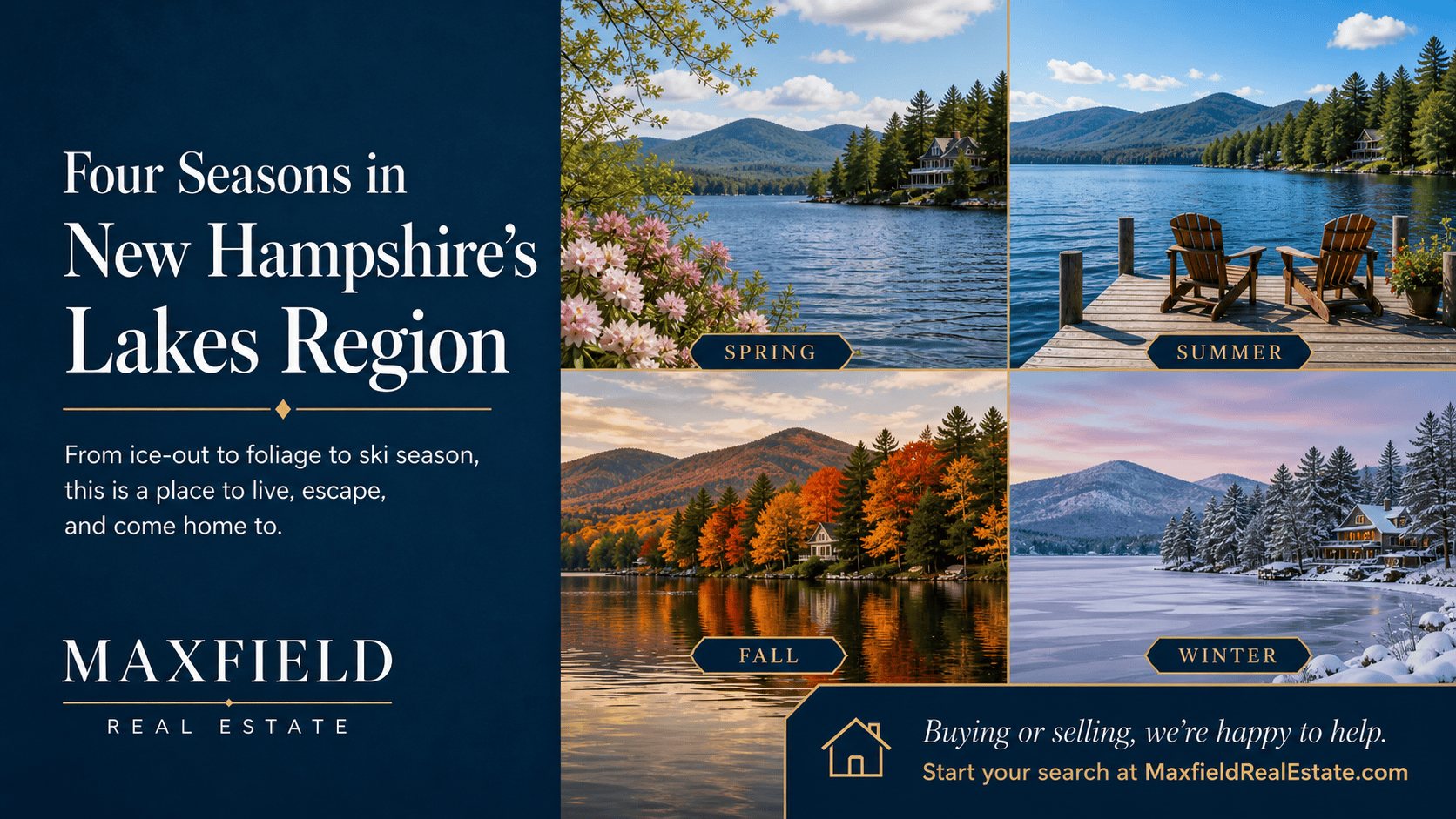
Summer brings boating, swimming, kayaking, paddleboarding, hiking, outdoor dining, concerts, and lakefront gatherings. Fall brings foliage, fairs, covered bridges, farm stands, and those ridiculous golden afternoons that make you forgive New England for February. Winter brings skiing, snowshoeing, ice fishing, snowmobiling, and quiet weekends by the fire. Spring brings mud, black flies, optimism, and the annual miracle of ice-out.
Very glamorous. Very real.
For buyers, this matters because a property’s value is not just about square footage and bedrooms. It is about how the home functions across the year.
Can you use it comfortably in winter?
Is the road maintained year-round?
Is the septic system appropriate for intended use?
Is there enough parking for guests?
Can the dock support the way you plan to boat?
Are short-term rentals allowed, restricted, or prohibited?
Is the home truly private, or only private when the leaves are on the trees?
These are not small questions. They are the difference between a smart purchase and a very expensive postcard.
The towns are not interchangeable
One of the most common mistakes buyers make is treating the Lakes Region as if every town offers the same lifestyle.
They do not.
Wolfeboro has a classic village feel and strong Lake Winnipesaukee identity. Meredith offers lakefront energy, restaurants, shops, and convenience. Alton has big-water access, mountain views, and a slightly more understated feel. Gilford offers proximity to Gunstock, Lake Winnipesaukee, the airport, and shopping. Laconia has multiple waterfront neighborhoods, Weirs Beach, access to Winnipesaukee, Winnisquam, and Opechee, and ongoing redevelopment energy.
Moultonborough, Center Harbor, Sandwich, Tuftonboro, New Hampton, Bristol, and the surrounding communities each offer different combinations of privacy, acreage, lake access, village life, commuting routes, and seasonal appeal.
That is why “I want to be in the Lakes Region” is only the beginning of the conversation.
A better question is:
What kind of life are you trying to build here?
Do you want to be near restaurants and services?
Do you want privacy?
Do you want a walkable town center?
Do you want a quiet lake?
Do you want big water?
Do you want skiing nearby?
Do you want rental potential?
Do you want legacy property potential for family gatherings?
Do you want to be close to I-93, the seacoast, Boston, or the White Mountains?
The right answer changes the search.
Waterfront requires local knowledge
Waterfront property is one of the most emotional categories in real estate.
It is also one of the most technical.
Buyers may focus on the shoreline, the dock, the beach, the deck, or the view. All of that matters. But the less glamorous details matter too.
Dock permits. Shoreland regulations. Septic setbacks. Water depth. Exposure. Road access. Association rules. Deeded rights. Shared waterfront. Seasonal restrictions. Private roads. Easements. Flood considerations. Winterization. Boat size. Mooring possibilities. Neighboring use. Rental rules.
This is where a pretty listing description is not enough.
A waterfront property can look perfect online and still come with limitations a buyer does not expect. Sometimes those limitations are perfectly manageable. Sometimes they change the entire use case.
That is why local guidance matters.
Not because buyers cannot do their own research. They can, and they should.
But because lake and lifestyle properties require a level of practical interpretation that goes beyond opening doors and admiring granite counters.
Granite is lovely.
Granite does not explain your dock rights.
Privacy, access, and convenience are part of the purchase
Many buyers come to New Hampshire wanting privacy. That is understandable.
But privacy has layers.
A long private road may feel peaceful in July and complicated in February. A wooded lot may feel secluded until you understand the boundaries, wetlands, slopes, or maintenance needs. An island camp may feel blissfully detached from the world until you start thinking about groceries, guests, contractors, medical access, storms, and boat logistics.
None of this is meant to discourage buyers.
Quite the opposite.
The right property can be extraordinary when the buyer understands what ownership really involves.
In the Lakes Region, lifestyle and logistics are often braided together. Pull one strand and the whole thing moves.
That is why the smartest buyers look beyond the photographs and ask better questions early.
Why sellers should pay attention too
This is not only a buyer story.
Sellers in the Lakes Region should understand what makes their property valuable to today’s buyers.
Sometimes the most marketable feature is not the thing the seller assumes.
It may be western exposure.
A protected cove.
A rare dock configuration.
Proximity to Gunstock.
Walkability to town.
A year-round private road.
Strong rental potential.
A grandfathered feature.
A large parcel.
A view corridor.
A layout that works for multigenerational gatherings.
A location that appeals to buyers coming from outside the immediate market.
Good marketing does not simply say, “Beautiful home near the lake.”
Good marketing explains why the property matters, who it fits, and what kind of life it makes possible.
That is especially important in a region where many buyers are not local. They may know they want New Hampshire. They may know they love the lake. They may not yet understand the difference between one shoreline, town, access road, or ownership structure and another.
That is where strategic marketing creates value.
The Lakes Region keeps winning because it offers something increasingly rare
The Lakes Region offers beauty, yes.
But beauty alone is not the whole story.
This region offers choice.
Big lakes and small lakes. Villages and back roads. Mountains and marinas. Camps and estates. Ski weekends and summer docks. Privacy and community. Old New England character and modern convenience. A slower pace without complete isolation. A place where a buyer can still find identity, not just inventory.
That is why people come here.
And it is why understanding the region matters before making a move.
Because buying in the Lakes Region is not just about finding a house.
It is about finding the right version of New Hampshire for the life you actually want to live.
And that, as anyone who has spent time here knows, is where the real work begins.
Ready to Find Your Place in the Lakes Region?
Whether you are searching for a waterfront home, an island property, a village retreat, a mountain-access getaway, or a full-time home in one of New Hampshire’s most beautiful regions, the right guidance matters.
And if you are thinking about selling, the same is true. The strongest results come from understanding not just what your property is, but who it is for, how it should be positioned, and which buyers are most likely to recognize its value.
At Maxfield Real Estate, we are happy to help you navigate the Lakes Region with local knowledge, practical guidance, and a clear understanding of what makes each property, town, lake, and lifestyle different.
Ready to start looking for your ideal Lakes Region property?
Start your search here
Thinking about buying or selling in the Lakes Region?
We would be happy to help.




.png)


Footer Social Links