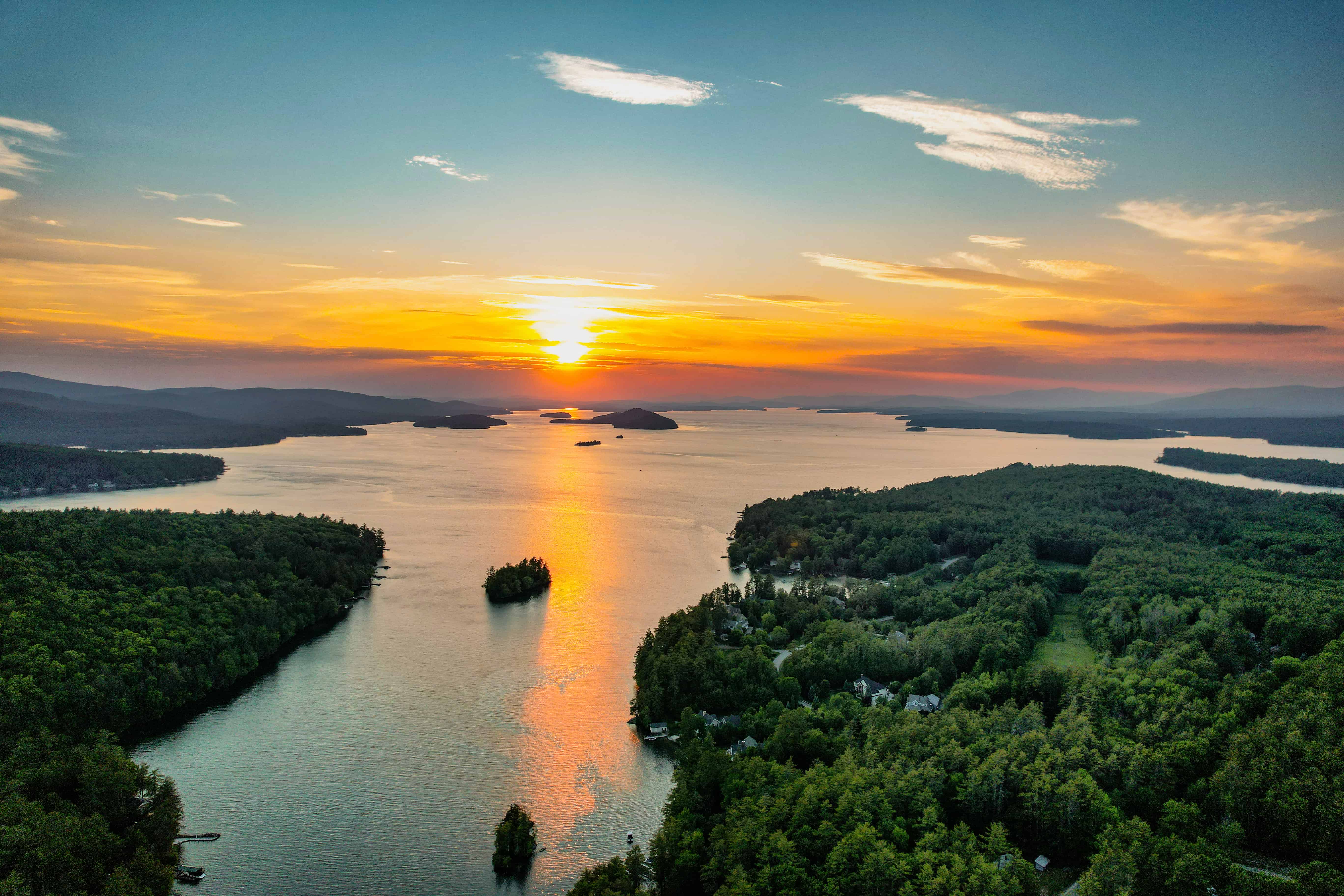
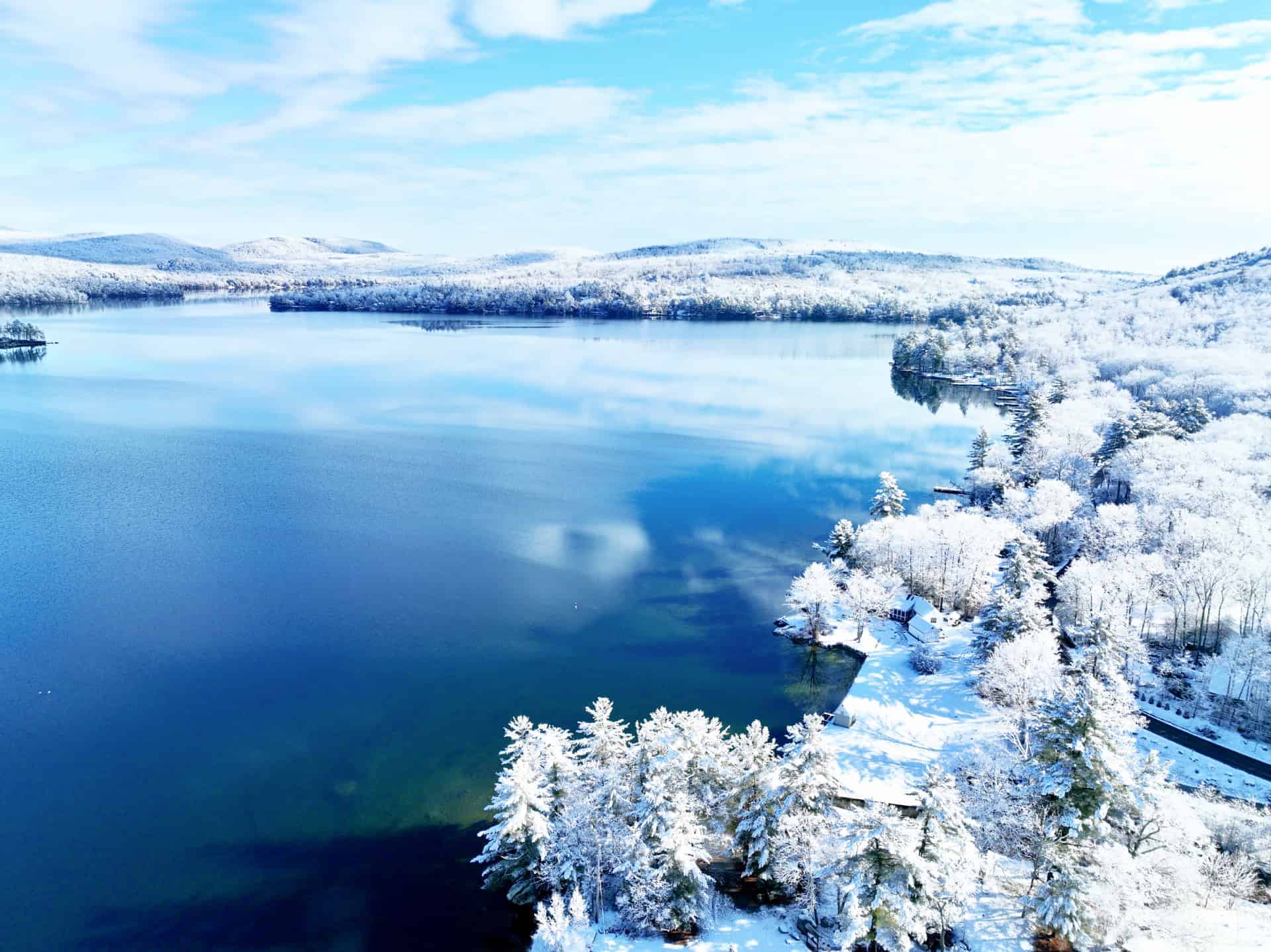



New Hampshire’s lakes are among the state’s most valuable natural and economic assets. From Lake Winnipesaukee and Squam Lake to Newfound Lake, Winnisquam, Ossipee, and countless smaller ponds and waterways throughout the Lakes Region, healthy lakes support property values, recreation, tourism, wildlife, and the character of communities across New Hampshire.
Whether you already own waterfront property, are considering purchasing a lakefront home, or simply live near one of the state’s watersheds, understanding lake preservation is becoming increasingly important for property owners throughout the region.
Lake health is directly connected to long-term waterfront value, responsible development, and the future of New Hampshire’s lake communities.
If you are exploring waterfront living throughout the Lakes Region, you can browse current New Hampshire waterfront homes for sale.
Why Lake Health Matters
Healthy lakes support:
-
Strong waterfront property values
-
Recreation and tourism
-
Wildlife habitat
-
Community identity
-
Clean water resources
-
Long-term environmental sustainability
For waterfront homeowners, lake quality is more than an environmental issue — it directly affects property desirability, long-term appreciation, and overall enjoyment of the property itself.
Even relatively small environmental changes can significantly affect water clarity and ecological health over time.
Common Threats to New Hampshire Lakes
Stormwater Runoff
Stormwater runoff is one of the leading causes of water quality degradation throughout New Hampshire.
As rainwater flows across roads, rooftops, driveways, and lawns, it collects pollutants such as:
-
Sediment
-
Oil residue
-
Fertilizer
-
Road salt
-
Bacteria
-
Phosphorus
Without proper drainage and vegetation buffers, these materials eventually enter nearby lakes and ponds.
Excess phosphorus can contribute to:
-
Algae blooms
-
Reduced water clarity
-
Oxygen depletion
-
Fish habitat damage
Shoreline Erosion
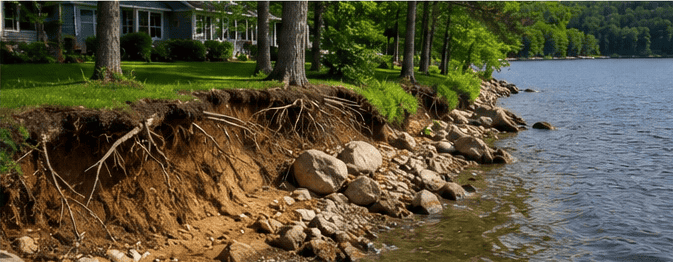
Natural shoreline vegetation helps stabilize soil and absorb runoff before it reaches the lake.
When shorelines are excessively cleared or heavily altered, erosion increases and sediment enters the water.
Sediment buildup can:
-
Reduce water clarity
-
Damage aquatic ecosystems
-
Carry additional pollutants
-
Accelerate lake aging
Maintaining natural shoreline buffers is one of the most effective ways to protect lake ecosystems.
Aging Septic Systems
Many waterfront homes throughout New Hampshire rely on private septic systems.
Older or poorly maintained systems can contribute phosphorus and bacteria contamination to nearby water bodies, particularly when located close to shorelines.
Property owners should:
-
Schedule regular pumping and inspections
-
Avoid overloading systems
-
Maintain proper drainage
-
Keep vehicles off leach fields
Buyers considering waterfront property should always review septic age, inspection history, and compliance status during due diligence.
Best Practices for Waterfront Property Owners
Preserve Natural Vegetation
Native plants and natural shoreline buffers help:
-
Filter runoff
-
Stabilize banks
-
Absorb nutrients
-
Reduce erosion
-
Improve wildlife habitat
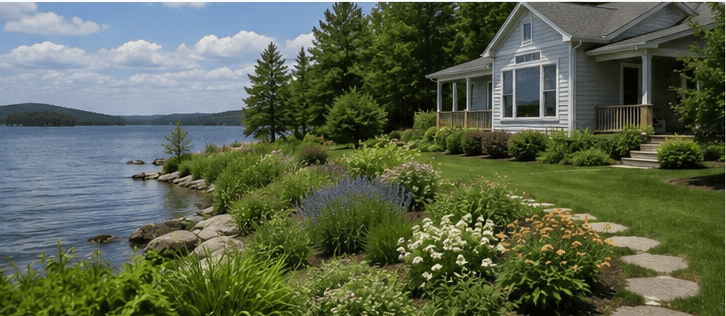
Maintaining a healthy vegetated shoreline protects both water quality and long-term property value.
Reduce Impervious Surfaces
Large paved areas increase runoff and reduce natural groundwater absorption.
Property owners can help minimize runoff by using:
-
Permeable pavers
-
Gravel pathways
-
Rain gardens
-
Native landscaping
-
Improved drainage systems
Use Lake-Friendly Landscaping
Traditional lawns often require fertilizer and irrigation that contribute to water quality issues.
Native landscaping is generally lower maintenance and better suited to protecting shoreline ecosystems.
Recommended approaches include:
-
Native plants
-
Reduced lawn areas near shorelines
-
Mulched planting beds
-
Minimal fertilizer use
-
Deep-rooted vegetation
Understanding New Hampshire Shoreland Regulations
New Hampshire’s Shoreland Water Quality Protection Act regulates development near protected waters throughout the state.
The law governs:
-
Vegetation removal
-
Building setbacks
-
Impervious surface coverage
-
Excavation and grading
-
Shoreline stabilization projects
Before beginning construction or renovations near the water, property owners should verify:
-
Local zoning requirements
-
Shoreland permit requirements
-
Septic setbacks
-
Wetlands restrictions
For additional insight into waterfront communities and Lakes Region towns, explore New Hampshire Lakes Region communities.
What Buyers Should Know Before Purchasing Waterfront Property

Purchasing waterfront real estate is significantly different from buying a traditional residential property.
In addition to evaluating the home itself, buyers should understand:
-
Shoreland regulations
-
Septic systems
-
Flood zones
-
Dock permits
-
Private road maintenance
-
Water quality conditions
-
Seasonal accessibility
Buyers researching waterfront homes can also explore current NH Waterfront real estate listings and surrounding lake communities throughout New Hampshire.
Questions Buyers Should Ask
Septic System
-
When was the system installed?
-
Has it been inspected recently?
-
Is it compliant with current standards?
Shoreline Condition
-
Is there visible erosion?
-
Have stabilization projects been completed?
-
Are retaining walls permitted?
Flood Risk
-
Is the property located within a FEMA flood zone?
-
Has flooding occurred historically?
Dock & Waterfront Rights
-
Are permits current?
-
Are there seasonal restrictions?
-
Is waterfront access deeded?
Road Maintenance
-
Is the road public or private?
-
Are there maintenance agreements?
Lake Associations & Conservation Organizations
Many New Hampshire lakes are supported by nonprofit lake associations and watershed organizations dedicated to:
-
Water quality monitoring
-
Conservation education
-
Invasive species prevention
-
Shoreline management
-
Community stewardship
Organizations throughout the Lakes Region coordinate:
-
Volunteer monitoring programs
-
Educational outreach
-
Water testing
-
Conservation projects
-
Public awareness initiatives
These efforts play an important role in protecting both lake ecosystems and long-term waterfront property values throughout New Hampshire.
How Water Quality Impacts Property Values
Water quality directly influences:
-
Buyer demand
-
Property desirability
-
Long-term appreciation
-
Vacation rental appeal
-
Community growth
Healthy lakes consistently command stronger demand than waterways experiencing environmental decline or water quality concerns.
As waterfront inventory throughout New England remains limited, environmental stewardship may become even more important to long-term waterfront value.
You can explore available New Hampshire waterfront listings to better understand the current market throughout the Lakes Region.
Frequently Asked Questions About New Hampshire Waterfront Property
Do waterfront homes in New Hampshire require special septic inspections?
Many waterfront homes rely on private septic systems. Buyers should review inspection history, system age, and compliance status during due diligence.
What is the Shoreland Water Quality Protection Act?
New Hampshire’s Shoreland Water Quality Protection Act regulates development near protected waters, including vegetation removal, setbacks, and impervious surface limitations.
Does lake health affect property values?
Yes. Water quality, shoreline condition, and long-term environmental stewardship can significantly influence waterfront property demand and value.
Are lake associations important for homeowners?
Lake associations often provide water quality monitoring, conservation education, and stewardship programs that help protect long-term lake health.
Final Thoughts
Protecting New Hampshire’s lakes requires cooperation between homeowners, local communities, lake associations, conservation organizations, and responsible development practices.
Healthy lakes help preserve:
-
Property values
-
Recreation
-
Wildlife habitat
-
Community character
-
Long-term economic vitality
Whether you already own waterfront property or are considering purchasing a lakefront home, understanding lake preservation is an essential part of responsible ownership throughout New Hampshire’s Lakes Region.
Exploring Waterfront Property in New Hampshire?
Understanding shoreland regulations, lake preservation, septic systems, and long-term waterfront value is essential when buying or selling waterfront property throughout the Lakes Region.
Whether you are searching for a seasonal retreat, year-round waterfront home, investment property, or development opportunity, local knowledge matters.
Explore:
For additional guidance on waterfront properties and Lakes Region real estate, connect with the Maxfield Real Estate team.



.png)


Footer Social Links